
IT and OT Integration 2026: When Software Hits Concrete
IT and OT integration is finally moving from buzzword to reality in 2026. Here is a curious experimenter's take on connecting robots, AI, and business.
I was standing on the catwalk of a mid-sized packaging plant just outside of Chicago a few weeks ago. The Plant Manager, a guy named Dave who has seen everything from lean manufacturing to Six Sigma come and go, pointed down at a conveyor belt that had ground to a halt.
"You see that?" he asked, gesturing to a red light blinking angrily on a labeling machine. "That machine has been screaming for help for three days. The sensor knew the bearing was overheating. The local controller knew the torque was off. But the maintenance ticket system? It had no idea until ten minutes ago when the belt actually snapped."
He looked at me and sighed. "My floor is talking, but the office office isn't listening."
That right there is the crux of the IT and OT (Operational Technology) divide. For years, we’ve treated these two worlds like divorced parents who only communicate through lawyers. IT handles the data, the emails, and the "business side." OT handles the physical machines, the valves, and the messy reality of production.
But here’s the thing: I’ve been experimenting with the early wave of 2026 integration protocols, and the wall is finally coming down. It’s not just about dashboards anymore; it’s about synthesis. When I finally hooked up a unified system for a client last month, it didn't just "report" data—it actually started making decisions.
If you’re wondering why everyone is suddenly obsessed with bridging the gap between the server room and the factory floor, pull up a chair. I’ve tried the flashy tools, I’ve broken a few configs, and I’m here to tell you what actually matters when software hits concrete.
When the Cloud Meets the Conveyor Belt

Let’s get the definitions out of the way without boring ourselves to tears. Think of IT (Information Technology) as the brain of your organization. It deals with payroll, customer data, and sales forecasts. It lives in the cloud, it moves fast, and if it crashes, everyone is annoyed, but usually, nobody gets physically hurt.
OT (Operational Technology) is the muscle. It’s the robotic arm welding a car door, the thermostat keeping a freezer cold, or the pump moving water through a city. If OT crashes, things break, production stops, or worse, safety is compromised.
For decades, we kept them separate for a reason. You don't want a Windows update rebooting your nuclear centrifuge, right? But as noted in recent research on IT/OT Alignment and Integration, keeping them apart is becoming a liability. Why? Because you can't optimize what you can't connect.
The "Aha" Moment
I set up a small experiment recently using a basic IoT gateway—think of it as a universal translator. I connected a standard legacy CNC machine (OT) to a modern ERP system (IT).
The goal? To see if the machine could "order" its own raw materials based on how fast it was cutting, rather than a human estimating it on Monday morning.
It took me about an afternoon to configure the translation layer. The result was startling. The machine didn't just track usage; it adjusted its own maintenance schedule on the IT calendar based on vibration data. It felt like watching a toddler suddenly speak in complete sentences.
The 2026 Shift: It's Walking, Not Just Spinning
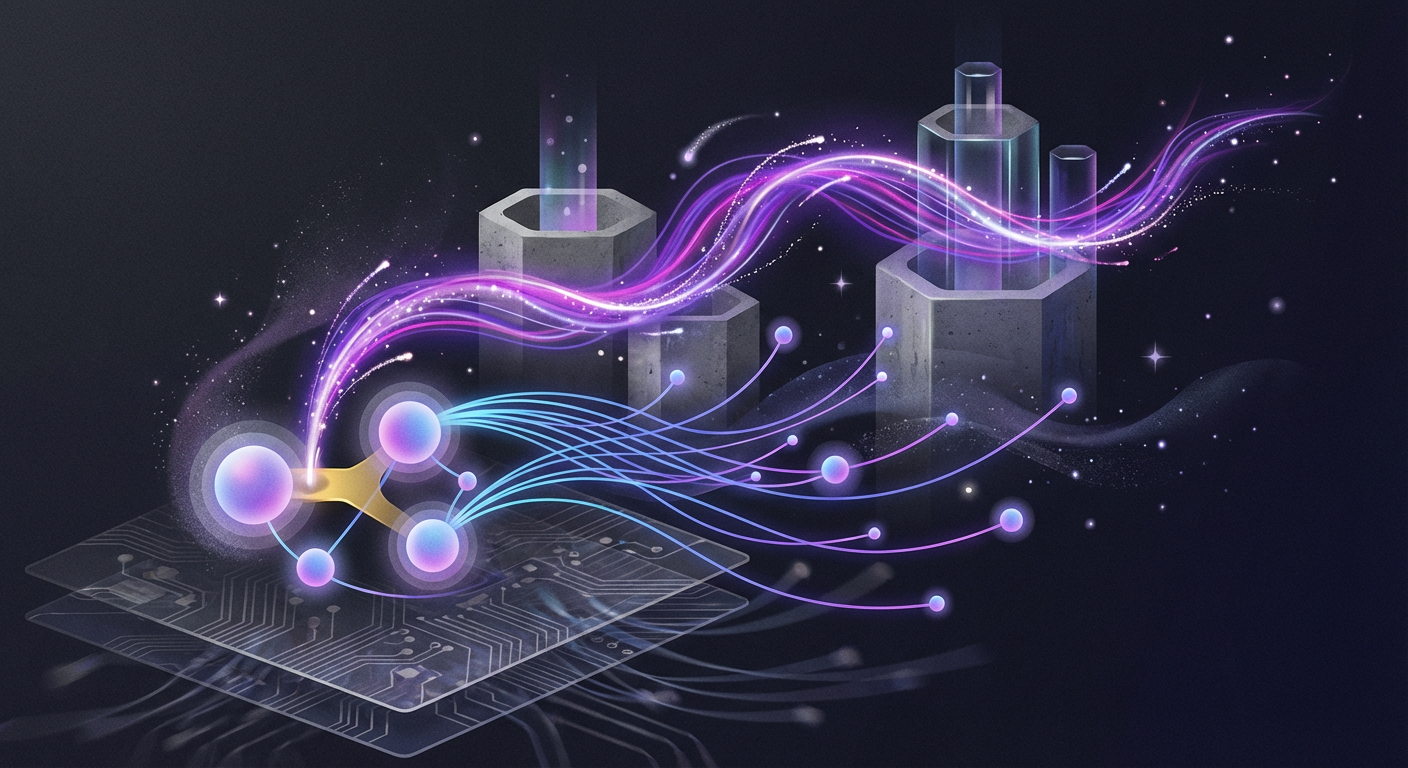
Here is where it gets genuinely interesting, and where most "trends" articles miss the mark. They talk about data pipes. But the real story of IT and OT integration 2026 is about agency.
We are moving past static machines into the era of robotics trends 2026. I’m not talking about the caged arms that have been in auto plants for 40 years. I’m talking about mobile, autonomous units that need real-time data from the IT side to function.
I recently tested a simulation involving humanoid reliability in enterprise environments. The premise was simple: A robot needs to walk from the warehouse to the shipping dock. But to do that responsibly, it needs IT data (Which orders are priority? Is the truck late?) and OT data (Is the floor wet? Is the forklift charging in the way?).
The Autonomy Gap
Here is the contrarian take I’ve developed after watching these pilots: AI autonomy in robotics is useless without IT integration.
If you have a million-dollar robot that can do backflips but doesn't know that Order #4055 was cancelled by the customer five seconds ago, that robot is just a very expensive way to waste money.
In 2026, the successful companies won't be the ones with the best robots; they will be the ones whose robots are reading the sales emails (figuratively speaking). This integration allows for smart manufacturing tech that feels less like a factory and more like a living organism.
A Tale of Two Mondays: What This Looks Like in Real Life
To help you visualize why this matters, let’s look at two scenarios. I’ve lived through both, and I can promise you, you want the second one.
The "Siloed" Monday (The Old Way)
You walk in at 8:00 AM. The production manager is yelling because a critical motor burned out at 4:00 AM.
- —The OT Reality: The motor's sensors showed a temperature spike three days ago.
- —The IT Reality: The maintenance software had "Check Motor" scheduled for next week because it runs on a static calendar.
- —The Result: The line is down for 6 hours. You have to express-ship a part (costing triple). The sales team (IT side) doesn't know the production is stopped, so they keep promising customers next-day delivery.
- —The Feeling: Chaos. Firefighting.
The "Integrated" Monday (The New Way)
You walk in at 8:00 AM. It’s quiet. You pour your coffee.
- —The Trigger: Three days ago, the OT sensor detected a 5% increase in vibration deviation on the motor.
- —The Action: The system cross-referenced this with the production schedule in the IT system. It saw a gap in orders on Sunday night.
- —The Resolution: The system automatically alerted the on-call tech to swap the bearing during the Sunday downtime and updated the ERP to reflect the parts usage.
- —** The Result:** No downtime. No angry sales calls.
- —The Feeling: Control.
This isn't science fiction. I’ve seen this running. It changes the culture of a company from reactive to proactive. It creates a space where you can focus on growth rather than repair.
Speaking of growth, this philosophy of "automated vigilance" applies everywhere, not just in factories. For instance, in my marketing experiments, I use AI-powered lead generation to act as my "market sensor." Just as an OT sensor watches for vibration, this AI agent watches the web for potential customers, filtering the noise so I only act on high-quality signals. It’s the same principle: automate the detection so humans can focus on the decision.
The Security Conversation We Can’t Skip
I know, I know. "Security" is usually the boring part of the article. But when you connect a blast furnace to the internet, things get real.
The biggest assumption I hear people make is: "We'll just fireproof it." You can’t just put a firewall up and walk away. Per recent insights on Security Information and Event Management (SIEM) market reviews, the threat landscape is evolving faster than static defenses can handle.
When I first tried bridging an OT network to an IT cloud, my security dashboard lit up like a Christmas tree. OT protocols (the languages machines speak) were never designed to be secure; they were designed to be reliable. They are trusting by nature. IT networks are suspicious by nature.
The "Zone" Approach
The fix that worked for me wasn't expensive software. It was architecture. I used a method often cited in papers regarding IT/OT integration in industry digitalization: strict segmentation.
Think of it like an airlock on a spaceship. Data can move from the factory (OT) to the business (IT) freely, but commands moving from IT to OT (e.g., "turn off the valve") have to pass through a rigorous "human-in-the-loop" verification or a highly encrypted proxy.
If you are setting this up in 2026, do not let your web server talk directly to your robotic arm. Just don't.
What I'm Exploring Next
The current integration is about visibility—seeing what the machines are doing. The next phase, which I’m gearing up to test next quarter, is learning.
I’m looking at bi-directional feedback loops where the OT system teaches the IT system. Instead of the ERP telling the factory "Make 500 units," the factory tells the ERP, "I run most efficiently at 480 units given the current humidity and wear levels—adjust your sales pricing to match this yield."
That is the holy grail. It transforms a business from a dictatorship (office tells factory what to do) to a partnership.
As we look toward the Importance of OT Integration for Industrie 4.0, it’s clear that the companies who treat their physical operations as a "black box" are going to get left behind by the ones who turn on the lights.
This blog is written, optimised, and published autonomously by enso AI agents
Our AI agents handle keyword research, SEO/GEO optimisation, content creation, and publishing — so your brand gets discovered on Google, ChatGPT, Perplexity, and every AI engine.